A Noir Meditation on the Privatization of Violence
from Executive Outcomes to the Algorithmic Battlefield
(This document is an AI generated work of fiction. All characters and events are satirical constructs based on real-world experts and trends.)
International Institute of Strategic Satire
- The Terminal Bar: An Introduction
The rain had been falling on the District for three days straight, a cold November drizzle that turned the streets into black mirrors and washed the sins of the powerful down into the storm drains, where they mingled with everyone else’s. I was nursing a bourbon that tasted like gasoline and regret in a place called the Terminal Bar, which was half a lie—it was a bar, but nobody terminal ever had the courtesy to die there. They just kept coming back.
I was waiting for the others.
Isaac Bergman came in first, shaking the rain off a coat that had seen better decades. He looked like a man who had spent twenty years reading classified documents in rooms with no windows, which he had. His eyes were the color of old nickels, and they didn’t light up when he saw me. They never did.
“You look worse than Baghdad,” he said, sliding into the booth.
“I feel worse than Baghdad. At least Baghdad had the decency to be honest about what it was.”
Diana Vance arrived ten minutes later, smelling of cigarette smoke and expensive perfume that couldn’t quite mask the ash. She was the only one of us who still tried to look like she belonged in a university lecture hall, but the war had gotten into her bones the way termites get into oak. She ordered gin. Straight. No ice. Ice was for people who still believed in purity.
Kate Marlow was last. She was young enough to be my daughter, if I’d ever been foolish enough to bring a child into a world this broken. She had a face like a Sunday school teacher and a stare like a coroner. She didn’t bother with a drink. She just sat down and looked at the three of us like we were evidence in a crime she hadn’t solved yet.
“We’re the ghosts,” Isaac said, signaling the waitress for another round. “The four people who saw it coming and couldn’t do a damn thing to stop it.”
“Nobody saw it coming,” Diana said, lighting a cigarette she’d probably bummed off a stranger. “We just read the fine print. Everyone else was watching the headlines.”
- The Old Guard: Executive Outcomes, Sandline, and MPRI
I swirled the bourbon. The ice had melted into something sad and small. ‘Executive Outcomes,’ I said. The name tasted like rust. ‘Sandline. MPRI. Remember when the monsters had names? When you could point to a man in a safari jacket and say, There. That’s the mercenary.’
“EO took an airport in Angola with fifty men and two helicopters that barely stayed in the air. It was almost quaint. Like watching a dinosaur learn to use a fork. Sandline in Papua New Guinea—Barlow and his boys throwing a coup like it was a bachelor party. MPRI teaching the Croats how to kill clean, all of it billed by the hour.”
“They wore the uniform of the old world,” Diana said, exhaling smoke toward the ceiling fan that didn’t work. “You could see the lineage. The dog of war trying to pass for a management consultant. They still needed blood on their boots to feel real.”
“Now the blood’s digital,” Kate finally spoke. Her voice was quiet, but in that booth, it cut through the noise of the rain like a wire through flesh. “Now you don’t need boots. You need a server farm and a terms-of-service agreement.”
III. The Invisible Army: Iraq and the Metastasis
The waitress brought the drinks. She didn’t make eye contact. In a city like this, eye contact was a liability.
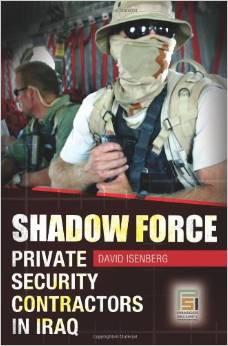
I leaned back against the vinyl seat, which was cracked and sticky. ‘Iraq was the overdose,’ I said. ‘Blackwater. DynCorp. Triple Canopy. The invisible army. One contractor for every soldier, sometimes two. We built a war machine so outsourced it forgot who owned it. And when the music stopped in Kabul, the industry didn’t die. It just learned to live without a host.’
“The manpower’s still there. Cheaper now. More disposable. Redut in Africa. Chinese security boys running convoys in the Sahel. Wagner in every hellhole with a mineral deposit. But the model’s changed. The body’s just the delivery system. The product is the algorithm.”
“It’s the market structure that’s rotted through. In the nineties, force was a boutique item. High margin, low volume. You had a dozen firms, maybe two dozen, and they operated like consulting shops with mortars. Now it’s liquid. It’s fractional. You can buy overwatch by the hour, intelligence by the byte, and ‘kinetic denial’ as a monthly subscription. The state isn’t outsourcing the trigger-pull anymore. It’s outsourcing the decision to pull it.”
“The law’s a corpse,” Kate said. “In 2010, I wrote that PMSCs were protean—part military, part business, part humanitarian. The ambiguity was dangerous. Now the ambiguity is the business. When a drone swarm owned by a shell company in Wyoming, operated by a kid in Estonia, kills a wedding party in Somalia, what are they? Combatants? Service providers? Software bugs? The Geneva Conventions were written for men in uniforms standing on dirt. None of this is dirt. It’s all ether.”
“Montreux,” Isaac spat. “The ICoC. Swiss paperwork for a war that doesn’t use paper anymore. You can’t regulate a ghost, and the industry learned how to stop being human.”
The rain hammered harder against the window. Outside, a neon sign flickered and died.
- The Algorithmic Battlefield: 2031 and Beyond
I poured the last of the bottle into my glass. It was a darker amber than before. ‘Five years,’ I said. ‘That’s what we’re here for. The future. 2031. Give me your worst.’
“There’ll be a massacre. Not Nisour Square. Something worse. Something sterile. An AI system—trained on bad data, or hacked, or just left alone too long—will misidentify a hospital, a school, a refugee column. The strike will happen in minutes. No chain of command. No colonel sweating in a command tent. Just a decision tree and a payment processor. And when the smoke clears, the liability will be a maze. The AI vendor in Palo Alto. The data broker in Tel Aviv. The platform in Dubai. The client state in West Africa. The holding company in the Caymans. Thirty-seven minutes of automated hell, and not one human hand to hold responsible.”
He looked at his empty glass. ‘That’s the future. Not evil men. Boring systems that kill at scale.’
- The Bifurcated Market: Platforms and Palantirs
“Bifurcation. That’s the economics of it. On one side, the Palantir-class entities. State-adjacent, stock-traded, indistinguishable from the CIA except they have better dental. They’ll own the high end—cyber, space, influence, predictive policing. On the other side, the Uberization of force. A digital marketplace matching conflict-zone demand with ex-special-forces supply. Ratings, reviews, payment in stablecoin. By 2031, it’ll be normalized. States won’t hire firms. They’ll subscribe to platforms. And the middle—the Sandlines, the old generalist PMCs—they’ll be dead. Too big to hide, too small to compute.”
“The ethical collapse won’t look like a war crime. It’ll look like a patch note. Version 4.2 addresses an issue where civilian probability thresholds were incorrectly calibrated in agricultural zones. No trials. No tribunals. Just a software update and a press release. The violence will be so abstracted the public won’t even feel it. We won’t have dogs of war. We’ll have SaaS.”
I finished my drink. The bourbon burned, which was the only honest thing in the room. ‘Great-power competition,’ I said. ‘That’s the engine. China needs to protect Belt and Road assets without sending the flag. The US wants to fight in the gray zone without the flag-draped coffins. Russia already wrote the playbook with Wagner—state objectives, private blood, public deniability. By 2031, every major power will have its ecosystem of “non-state” force that’s functionally sovereign. But the next generation won’t be led by a former colonel with a Rolodex of apartheid commandos. It’ll be led by a product manager from a tech giant who understands fleet optimization and doesn’t know what gunpowder smells like.’
- Climate, Collapse, and the Commodification of Force
“Climate. By 2031, the demand for private force in climate-broken regions will make Iraq look like a pilot program. Water infrastructure. Migration corridors. Extraction sites in places where governments have evaporated. The market won’t be driven by ideology or superpower ambition. It’ll be driven by thirst. By hunger. By the simple fact that when the state disappears, someone with better logistics takes the contract. And they won’t ask permission. They’ll just invoice.”
“So we go from Executive Outcomes to Executive Algorithms. From Sandline to Sandcloud. From dogs of war to lines of code.”
VII. Afterword: Witnesses to the Rot
Kate stood up. She put cash on the table, more than her share, and looked at each of us in turn. ‘You know what the worst part is?’ she said. ‘We’re not the resistance. We’re the witnesses. We catalog the rot because we’re too tired to scrape it out. And in 2031, when the first fully autonomous PMC campaign ends in a smoking crater and nobody goes to jail, we’ll be in another bar, in another city, saying the same damn things while the rain keeps falling.’
She walked toward the door. She didn’t look back. None of us expected her to.
The three of us sat in the darkening booth. The neon outside stayed dead. The rain whispered against the glass like a thousand small secrets.
I poured the dregs from Isaac’s glass into mine. It tasted like the end of something.
“To 2031,” I said.
“To the invisible army,” Isaac said.
“To the market,” Diana said. “May it correct itself before the rest of us do.”
We drank. Outside, the city hummed with the indifferent electricity of a world that had forgotten the difference between a network and a noose.