Isenberg Institute of Strategic Satire

This is a work of satirical AI generated fiction. Characters, dialogue, and events are composites created for commentary and entertainment. Any resemblance to actual persons, corporate structures, or beneficial ownership arrangements — living, deceased, or conveniently un-findable in a federal database — is a matter of authorial intent, not coincidence.
I. The Deletion
The bar had no name on the door, only a brass number that hadn’t matched the street address since the block was renumbered in 1987. Isenberg took the corner stool, the one with a sightline to both exits, out of habit rather than necessity. Across from him, nursing a club soda like it owed her money, sat Colton — twenty-six years chasing wire transfers through the Caymans, the Marshalls, and one memorable detour through a Delaware registered-agent office that turned out to be a UPS Store.
Isenberg: You look like a woman who just watched a filing cabinet catch fire.
Colton: Better than that. I watched the filing cabinet get formally decommissioned, the ashes swept up, and a press release issued thanking everyone for their patience. August eleventh. Treasury killed it clean — beneficial ownership reporting, gone, for every domestic company and every U.S. person behind them. Then FinCEN said the quiet part out loud: they’re deleting what’s already on file. Thirty-three million entities, and the record of who actually owns them just —
Isenberg: Poof.
Colton: Poof.
She said it the way other people say the name of an ex-husband — with the specific fatigue of someone who’d built a career on the assumption the thing would eventually get easier, not simply cease to exist.
Isenberg: Play this out for me. Not the small-business landlord in Ohio who files three LLCs and hated the paperwork. The other kind of client.
Colton: The other kind of client is why I’m drinking club soda instead of celebrating. Think about who actually needs a domestic shell company with no traceable owner. Not the guy renting out a duplex. It’s the guy who wants to own eleven percent of a security contractor without his name showing up next to it — because his last name is on an OFAC list, or a UN panel-of-experts report, or because he’s a procurement officer at the agency the contractor is bidding to, and that’s a conflict he’d rather not disclose.
II. The Subcontract Beneath the Subcontract
Isenberg: The industry’s always run on layers. Prime contractor, subcontractor, local fixer, some outfit registered in a jurisdiction nobody’s heard of that supplies the actual bodies on the ground. The CTA (Corporate Transparency Act) was never going to touch the offshore end of that.
Colton: No, but it was starting to touch the domestic end — the holding company in Reston that owns the piece of the subcontractor in Sharjah, that owns the piece of the outfit running the checkpoint in a country that doesn’t show up in the press releases. That’s the layer where the actual American money changes hands, where a retired flag officer’s consulting LLC quietly takes a slice, where a sanctioned oligarch’s cousin parks a stake through a straw director. The CTA was supposed to be the flashlight on that layer. Now the flashlight’s been returned to the store, and they’re refunding your money.
Isenberg: SIGAR used to pull exactly that thread.
Colton: SIGAR pulled it in Afghanistan when there was a war to reconstruct and a mandate that hadn’t expired yet. GAO can still ask FinCEN for what’s left, but ‘what’s left’ is now defined by statute as approximately nothing for domestic persons. You want to know who really owns the LLC that owns the LLC that holds the PMSC’s minority equity? Best I can offer you now is a state Secretary of State filing listing a registered agent in Wilmington whose entire physical footprint is a mail slot.
III. Self-Regulation, Restated
Isenberg: The industry will say it doesn’t need FinCEN. Montreux Document, the ICoCA code, the ISOA’s own conduct standards — the whole self-regulatory architecture Singer and Avant used to write about, back when the pitch was that reputational discipline could substitute for a government registry.
Colton: Self-regulation works when someone outside the club can still check your homework. ICoCA certification tells a client the company says it screens its personnel and follows the rules of engagement. It was never built to tell you who’s sitting on the cap table. That was supposed to be FinCEN’s job, and FinCEN’s job is now, officially, to make sure it can’t answer that question even if a court subpoenas it — because the underlying data won’t exist anymore.
Isenberg: So the vetting gets better on the operational side — background checks, use-of-force policy, all the things the codes of conduct actually cover — and worse on the ownership side, at exactly the moment the ownership side is where the sanctions evasion and the procurement conflicts live.
Colton: That’s the trade. Nobody voted on that trade explicitly. It arrived as a small-business relief measure. The compliance lawyers I still talk to are telling family offices to keep their old CTA files rather than shred them — because ‘permanent’ is a policy word, not a physical fact, and a future FinCEN could always turn the lights back on. But that’s cold comfort to anyone trying to trace a contractor’s cap table this year, this contract cycle, this war.
IV. Last Call
Isenberg turned his glass a quarter turn, watching the ice settle, the way he did when he was deciding whether a story had a second act.
Isenberg: New York’s got its own LLC Transparency Act. A few other states are drafting something. Tell me that’s the second act.
Colton: It’s a patchwork covering foreign-formed entities doing business in one state, phased in over a couple of years, while the federal registry — the one place a single owner across fifty states and a dozen subsidiaries would have shown up in one search — gets deleted this month. It’s not a second act. It’s a stagehand sweeping up after the set’s already struck.
She left a twenty on the bar, more than the club soda was worth, and didn’t wait for change. Isenberg watched the door swing shut and thought, not for the first time, that the most dangerous shell company in America had never needed an offshore address. It just needed Congress to get tired of looking.
— END —
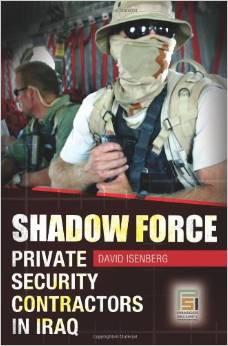
Surprisingly well written and researched. It pulls off a noir (dark in French) writing style, especially noir in the accompanying graphic.
I looked up several of the organizations/entities referenced in this work of fiction.