
NOIR FICTION & INVESTIGATIVE DOSSIER SERIES
Composite Transcript Series — No. 14
A Warburg Pincus Third Quarter 2026 Earnings Conference Call
October 22, 2026 • 10:00 AM ET
SATIRICAL FICTION
This document is a work of AI invented satire produced by the Isenberg Institute of Strategic Satire. Warburg Pincus, Allied Universal, and G4S are real entities referenced solely to ground a fictional premise; every executive, analyst, financial figure, contract, lawsuit, and quotation appearing below is invented and does not describe any actual statement, transaction, or event. Any resemblance to real persons, living or dead, or to actual corporate communications, is coincidental and unintended. No portion of this document should be relied upon for investment, legal, journalistic, or operational purposes.
CONTENTS
Prepared Remarks
Operator — Call Opening
Diane Whitfield — Corporate Relations
Lawrence Ashcombe — Executive Chairman
Q3 2026 Financial Snapshot [Graphic]
Nathaniel Voss — Chief Executive Officer
Miriam Castellano — Chief Financial Officer
Full-Year 2026 Guidance [Graphic]
Julian Okafor — Chief Operating Officer
Colin Bradshaw — Global Security Operations7
Questions and Answers
Analyst Q&A Session
Call Participants
Corporate Participants
Conference Call Participants
Prepared Remarks
The forty-first floor of the firm’s Lexington Avenue tower had the hush of a place that moved billions without raising its voice. Outside the glass, an October fog sat low over Midtown; inside, a horseshoe of muted monitors traced live feeds from three continents — a loading dock in Rotterdam, a data-center perimeter in Loudoun County, a container terminal south of Manila. Nobody in the room called it a war room. They called it “the floor.” On a normal quarter it hummed with the low arithmetic of guard-hour billing and contract renewals. This was not, entirely, a normal quarter.
Operator
Good day, and welcome to the Warburg Pincus third quarter 2026 earnings conference call. [Operator instructions.] Please note this event is being recorded. I would now like to turn the conference over to Diane Whitfield, Executive Vice President of Corporate Relations. Please go ahead.
Diane Whitfield — Executive Vice President, Corporate Relations
Thank you, operator. Good morning, everyone, and thank you for joining us for today’s discussion of Warburg Pincus’s third quarter 2026 earnings results. With us today are Lawrence Ashcombe, Executive Chairman of the Board; Nathaniel Voss, Chief Executive Officer; Miriam Castellano, Chief Financial Officer; Julian Okafor, Chief Operating Officer; and Colin Bradshaw, President of Allied Universal Global Security Operations.
This morning we will discuss our third quarter results, as well as our outlook, and we will conclude the call with a question-and-answer session. This conference call is also being webcast live on our investor website at investors.warburgpincus.com.
Today we will discuss non-GAAP information. A reconciliation from non-GAAP to GAAP results is included in the press release and supplemental disclosure issued this morning. Much of what we discuss, including our answers to your questions, may include forward-looking statements regarding our beliefs and current expectations. These statements are intended to fall within the safe-harbor provisions of the securities laws, and our actual results may differ materially from those statements as a result of factors described in our Securities and Exchange Commission filings, including our Form 10-K, 10-Q, and 8-K reports. With that, let me turn the call over to our Executive Chairman, Lawrence Ashcombe. Lawrence?
Lawrence Ashcombe — Executive Chairman of the Board
Thank you, Diane. Good morning, everyone, and thank you for joining us on our third quarter 2026 earnings call. I’m joined today by our senior management team to review our results, discuss our financial guidance, and update you on trends across our portfolio, with particular emphasis on our flagship holding in the private security and contracting sector, Allied Universal.
As many of you know, Warburg Pincus has been the principal owner of Allied Universal since 2015, and we financed and led its transformational acquisition of G4S in 2021. Five years later, that thesis has largely proven out. Allied Universal today employs more than 800,000 people across roughly ninety countries, a private workforce whose scale exceeds the standing militaries of all but a handful of nations, and it remains, by any reasonable measure, the most consequential continuing private-equity investment in the global private-security industry.
This morning we reported consolidated third-quarter revenues of approximately $4.35 billion, GAAP net income attributable to Warburg Pincus of approximately $165 million, or $2.05 per diluted share equivalent, and adjusted EBITDA of approximately $650 million. All three figures were ahead of the midpoint of our previously issued guidance.
During the quarter, Allied Universal secured a five-year, $650 million renewal of its Federal Protective Service and critical-infrastructure security contract with the Department of Homeland Security, a five-year, $780 million continuation of embassy and diplomatic-post security services across forty high-threat posts for the State Department’s Bureau of Diplomatic Security, and a three-year, $310 million extension covering physical security at four Department of Energy nuclear-materials sites. Our technology division also closed a $260 million managed-services agreement to provide physical security for hyperscale data-center campuses in Northern Virginia and Arizona.
Q3 2026 Financial Snapshot
| Metric | Q3 2026 | Q3 2025 | YoY Change |
| Total Revenue | $4.35 Billion | $3.95 Billion | +10.1% |
| GAAP Net Income (Attrib. to WP) | $165 Million | $142 Million | +16.2% |
| Diluted EPS Equivalent | $2.05 | $1.76 | +16.5% |
| Adjusted EBITDA | $650 Million | $598 Million | +8.7% |
| Adjusted EBITDA Margin | 14.9% | 15.1% | -20 bps |
| Assets Under Management (Firmwide) | $94.2 Billion | $87.5 Billion | +7.6% |
Figure 1. Consolidated Q3 2026 results as reported in prepared remarks.
Our success in this sector, I want to be candid, is not without complexity. Operating a private workforce of this scale in high-threat, low-oversight environments invites exactly the kind of scrutiny a firm our size should expect and should meet head-on rather than manage around. I’ll let Julian speak to the specifics shortly, but I want to flag three matters directly. First, a subcontractor operating under an Allied Universal task order in a conflict-adjacent corridor in South Asia was found to have exceeded its authorized mandate; we terminated the relationship immediately and commissioned an independent review. Second, we reached a preliminary settlement in a California wage-and-hour class action concerning meal-and-rest-break practices in our event-security division. Third, the UK Information Commissioner’s Office continues to examine data-retention practices inherited from the legacy G4S Cash Solutions business, predating our full integration of that unit.
Our management team remains focused on portfolio-wide deleveraging, which is a key strategic priority for the firm. Allied Universal’s net leverage now stands at 4.0x, down from 4.7x at the start of the year, and we remain on track toward our target of below 3.5x by the end of fiscal 2027. I’ll ask Nathaniel Voss to speak briefly to our broader strategic positioning before Miriam walks through the numbers in detail. Nathaniel?
Nathaniel Voss — Chief Executive Officer
Thank you, Lawrence. Good morning, everyone. When this firm first backed Allied Universal and then financed the acquisition of G4S, the thesis was straightforward: security is non-discretionary demand, resilient through economic cycles, and — at the time — highly fragmented. Five years on, that fragmentation has given way to genuine scale. Our purchasing power has cut uniform and equipment costs by roughly 18% since the G4S integration closed, and our proprietary incident-reporting network now processes more than 11 million data points a day, which increasingly functions as a threat-intelligence asset in its own right, not merely an operations log.
Scale of that kind brings scrutiny along with it, and I’d rather we earned a reputation for handling that scrutiny directly than for managing around it. That’s the spirit behind the compliance decisions Julian will walk through in a few minutes. It’s also behind our continued pivot toward higher-margin, technology-enabled services, which now account for roughly 9% of Allied Universal’s revenue, up from 6% two years ago, and which we expect to approach 20% by 2030. I’ll turn it back to Lawrence — Miriam, over to you for the numbers.
Miriam Castellano — Chief Financial Officer
Thank you, Lawrence. Good morning, everyone. As Lawrence noted, our third-quarter results exceeded the midpoint of our previously issued guidance. Consolidated revenues were $4.35 billion, adjusted EBITDA was $650 million, reflecting a 14.9% margin, and net operating income was $1.1 billion.
Breaking down revenue by segment: North American guarding and technology-enabled security contributed $2.7 billion, up 4.5% year-over-year on a same-store basis. Our UK and International division contributed $1.15 billion, roughly flat in reported terms but up 6% in constant currency, led by strength in Gulf-region government services and West African energy-infrastructure security. Our Technology and Specialized Risk Consulting segment, anchored by our Perigean Technologies platform, contributed $390 million, up 34% year-over-year and now representing approximately 9% of total revenue, versus 6% in the prior-year period. Legacy G4S businesses we continue to wind down or divest contributed the balance.
On costs: direct labor remains our largest line item at roughly 68% of revenue. Average hourly wages for security officers rose 5.2% year-over-year; we estimate we recovered approximately 70% of that inflation through pricing actions, contract-mix shift, and productivity gains from our technology stack, leaving a modest margin gap we expect to close over the next several quarters. Net interest expense was $205 million, up from $188 million a year ago, reflecting the incremental term loan drawn earlier this year to fund our Perigean acquisition and related working-capital needs. We ended the quarter with total debt of approximately $4.7 billion against $410 million in cash, for net debt of roughly $4.3 billion.
Full-Year 2026 Guidance
| Metric | FY2026 Outlook | Notes |
| Consolidated Revenue | $17.2B – $17.6B | Prior guide: $16.8B – $17.1B |
| GAAP Net Income (Attrib. to WP) | $620M – $660M | Prior guide: $580M – $620M |
| Adjusted EBITDA | $2.70B – $2.85B | Prior guide: $2.60B – $2.75B |
| Net Debt Reduction Target | $350M / year (avg.) | Through end of FY2027 |
| Effective Tax Rate | ~25% | Exclusive of discrete items |
Figure 2. Updated full-year 2026 guidance, raised from prior quarter.
We generated $395 million in free cash flow this quarter and applied $260 million of it to debt reduction. We are also exploring the sale of our Latin American cash-in-transit business, which we believe could generate $400 million to $500 million in proceeds and would meaningfully accelerate our path to our 3.5x leverage target, potentially by two quarters. Our effective tax rate for the quarter was 24.8%, and we expect a full-year rate near 25%, excluding discrete items tied to the California settlement and any asset-sale proceeds. At this time, I will turn the call over to Julian Okafor for an operational update.
Julian Okafor — Chief Operating Officer
Thank you, Miriam. Good morning, everyone. I’ll cover three areas: operational performance, our government contract portfolio, and our response to the compliance matters Lawrence referenced.
On operations: during the third quarter, Allied Universal facilities underwent 214 internal and external audits, including accreditation reviews, government compliance inspections, and client-specific quality assessments, with an average score of 96.1%, up from 94.4% a year ago. Our unified digital command platform, now deployed across all North American operations, has driven a 12% reduction in client churn and a 21% improvement in incident-response times.
On the government portfolio: beyond the DHS, State Department, and Department of Energy contracts Lawrence mentioned, we were awarded a new $210 million agreement to provide protective services for USAID operations in three high-risk countries, with quarterly human-rights compliance reporting to the State Department’s Office of Inspector General. We continue to reduce our footprint in immigration-detention facility management, consistent with shifting investor and political sentiment; we now operate three ICE processing centers with roughly 2,900 beds, down from eight facilities and 7,400 beds three years ago, and we are not bidding on new detention capacity.
On compliance: the independent review of the South Asia subcontractor matter, led by a retired U.S. Army inspector general, has been completed and delivered to our board. It found that the subcontractor circumvented our vetting protocols using falsified credentials and exceeded its authorized mandate by engaging in unauthorized offensive operations; the review found no evidence of corporate-level knowledge. We have implemented all thirty-one of its recommendations, including a new Human Rights Compliance Officer reporting directly to me. Separately, we have dissolved our third-tier subcontractor network in a small number of additional high-risk jurisdictions in West Africa and Southeast Asia, bringing those functions in-house under direct Allied Universal supervision with enhanced vetting standards. On the California matter, we have reached a preliminary $50 million settlement fund in the consolidated wage-and-hour action, which we expect to finalize in the fourth quarter. And on the UK Information Commissioner’s inquiry into legacy G4S data-retention practices, we are cooperating fully and have committed $40 million to upgrading global data-governance infrastructure; we do not currently expect a material financial penalty, though the matter has cost us standing on three municipal-council bid lists in the UK pending its resolution.
At this time, I will turn the call over to Colin Bradshaw for a review of our global security operations.
Colin Bradshaw — President, Allied Universal Global Security Operations
Thank you, Julian. Good morning, everyone. During the third quarter, our protective-services division logged approximately 13.6 million patrol hours across commercial, residential, and critical-infrastructure sites. Our specialized-operations group — high-threat protection, maritime security, and aviation security — conducted more than 2,200 missions across thirty-one countries. Our maritime unit safely transited 840 vessels through the Gulf of Aden and Red Sea corridors despite continued regional disruption, with zero successful boardings of an Allied Universal-protected vessel. We also extended, for a further five years, our contract providing static, mobile, and drone-assisted security across three major European commercial shipping hubs.
Executive-protection demand continues to surge, particularly among technology-sector clients concerned about targeted harassment of senior leadership; we now provide full-time protection details for 174 C-suite executives, up from 121 a year ago, and our Secure Journey travel-risk platform generated $88 million in revenue this quarter, up 38% year-over-year.
On technology: our drone-based perimeter-security offering is now deployed at over 300 sites, up from 165 at the start of the year, at roughly 60% of the cost of equivalent manned coverage. We are piloting AI-enabled behavioral analytics in ten major metropolitan transit systems to help flag anomalous behavior; we are proceeding deliberately here, given the legitimate civil-liberties questions these tools raise, and we do not intend to move faster than our governance framework allows.
On our people: we hired roughly 39,000 new security professionals this quarter and graduated 7,900 from our training academy, which now includes de-escalation, cultural-competency, and human-rights modules. Voluntary turnover improved to 39%, from 45% a year ago. We are proud of the men and women who carry out this work, often under demanding conditions, and we remain focused on giving them the training, oversight, and support the moment requires. That completes our prepared remarks. We would be glad to take your questions.
Questions and Answers
Operator
[Operator instructions.] Our first question today comes from Derek Hallowell with Bishop Street Capital. Please go ahead.
Derek Hallowell — Bishop Street Capital — Analyst
Good morning, and thanks for taking the question. Miriam, margins came in a touch light year-over-year even with the technology mix shift. What’s the realistic path back to the 16-to-17% adjusted EBITDA margins the business was posting a couple of years ago — and is that even still the right long-term target?
Miriam Castellano — Chief Financial Officer
Good morning, Derek. Fair question. Those earlier margins benefited from some pandemic-era emergency-contract pricing and a lower starting wage base that isn’t coming back at that magnitude. That said, we think 16.5% to 17% is achievable over the next eighteen to twenty-four months through three levers: continued mix shift toward Perigean and our broader technology stack, which run meaningfully above our guarding margins; roughly $110 million of remaining run-rate G4S integration synergies, mostly in European back-office consolidation; and pricing — we have about $2 billion of annual contract value up for renewal over the next four quarters, and we’re pushing for inflation-linked escalators we weren’t able to secure in 2024 and early 2025. Call it a 2028 story more than a 2027 one.
Derek Hallowell — Bishop Street Capital — Analyst
Understood. And quickly on the potential Latin American cash-in-transit sale — what does that business contribute to EBITDA, and what does the midpoint of your proceeds range do to leverage?
Miriam Castellano — Chief Financial Officer
It generates roughly $50 million in annual EBITDA. At the $450 million midpoint of our range, applied entirely to debt paydown, that takes us from 4.0x to roughly 3.6x immediately, and puts us at our 3.5x target by around mid-2027 — ahead of our original schedule.
Operator
The next question comes from Priya Anand with Meridian Research. Please go ahead.
Priya Anand — Meridian Research — Analyst
Good morning. On the DHS and Federal Protective Service renewal — is that fully funded, or is it exposed to continuing-resolution risk? And does the margin on that contract already reflect the wage increases mandated under the Service Contract Act?
Lawrence Ashcombe — Executive Chairman of the Board
Good morning, Priya. The contract has a funded base year plus four option years, which is standard for DHS work. Even under the current continuing resolution, the base-year funding is already obligated. And yes, the margin reflects the Service Contract Act increase — we negotiated a price escalator tied directly to it. Our federal partners have been collaborative on that front.
Priya Anand — Meridian Research — Analyst
That’s helpful. Separately — you mentioned the South Asia subcontractor matter and the dissolution of your third-tier network in West Africa and Southeast Asia. Can you characterize the litigation exposure from the original incident? Is this individual claims, or is there a broader pattern-and-practice inquiry underway?
Julian Okafor — Chief Operating Officer
It’s individual and derivative claims at this point — families of several local nationals have filed suit, and we’ve moved to compel arbitration under the applicable employment agreements; we believe any liability is capped under the relevant defense-contractor liability framework. There is no formal pattern-and-practice inquiry by federal authorities at this time, though a Senate committee has requested documents as part of its broader review of private-security-contractor oversight, and we’re cooperating fully. We’ve reserved $60 million for potential settlements and legal costs, which Miriam has included in this quarter’s results. We think that’s adequate, though we’d acknowledge the reputational exposure here exceeds the pure financial number.
Operator
The next question comes from Thomas Egerton with Harbor View Partners. Please go ahead.
Thomas Egerton — Harbor View Partners — Analyst
Good morning. I wanted to ask a slightly more philosophical question. There’s growing scrutiny from the UN Working Group on Mercenaries and a number of NGOs about the broader privatization of force. How do you respond to the argument that certain functions in conflict-adjacent environments are inherently governmental and shouldn’t be delegated to private firms at all, however well-vetted?
Nathaniel Voss — Chief Executive Officer
Thomas, it’s a serious question and we don’t wave it away. Our position is that there’s a bright line between traditional protective security and the inherently governmental use of lethal force. Allied Universal does not provide offensive combat capability, does not operate armed drones, and does not conduct direct-action operations. What we provide in high-threat environments is protective work — static site security, convoy protection, personnel escort — under the explicit direction of government or corporate clients. The South Asia subcontractor violated that mandate, which is exactly why we terminated the relationship the moment it came to light. We support tighter regulation and transparency across this industry, and we back international frameworks like the Montreux Document and the International Code of Conduct. We also recognize the industry, including us at times, hasn’t always lived up to that standard, and we intend to be part of closing that gap rather than arguing it doesn’t exist.
Thomas Egerton — Harbor View Partners — Analyst
Appreciate the directness. Quick follow-up for Lawrence — any change in thinking on capital return? Dividends, buybacks, anything at the holding-company level?
Lawrence Ashcombe — Executive Chairman of the Board
Not at this time, Thomas. We think the highest and best use of capital right now is continued deleveraging and positioning Allied Universal for a well-timed public listing, which we’re now targeting for the 2028-to-2029 window. We’ll keep returning capital to our limited partners through realized distributions as portfolio exits occur, as we have for four decades. Dividend policy for Allied Universal itself would be a question for the board at the time of any offering.
Operator
The next question comes from Angela Marsh with Northcastle Securities. Please go ahead.
Angela Marsh — Northcastle Securities — Analyst
Good morning. On the UK Information Commissioner’s inquiry — you said you don’t expect a material penalty. Can you put a number on what “not material” means here, and is there risk to existing municipal contracts in the UK?
Julian Okafor — Chief Operating Officer
We’d characterize “not material” as under $20 million in potential fines. The ICO has broad civil-penalty authority, but its largest fines have historically targeted willful or repeated violations, and this is a legacy data-retention practice we inherited and are actively remediating. The bigger near-term impact is that we’ve been suspended from bidding with three UK municipal councils pending resolution, which represents roughly $15 million in annual revenue opportunity. We expect reinstatement with at least two of those three councils by year-end.
Angela Marsh — Northcastle Securities — Analyst
Understood. And on labor — 5.2% wage growth, but you said you’re only recovering about 70% of that through pricing. Where does the other 30% show up, and when does that gap close?
Miriam Castellano — Chief Financial Officer
It shows up as the modest year-over-year margin compression you saw in this quarter’s numbers. Pass-through varies by contract type — our federal contracts largely have cost-plus or economic-price-adjustment structures that catch up with a ninety-to-hundred-twenty-day lag, but a meaningful share of our commercial book is on fixed three-year escalators of 2 to 3% that were signed before the recent wage surge. We’re now embedding CPI- or wage-indexed escalators into new and renewal commercial contracts, and we’ve pushed through mid-contract adjustments on about a third of our at-risk commercial portfolio. We’d expect that gap to close substantially over the next two to three quarters as more of the book turns over.
Operator
The next question comes from Marcus Whitlow with Cardinal Point Advisors. Please go ahead.
Marcus Whitlow — Cardinal Point Advisors — Analyst
Good morning. On technology — 34% growth is strong, but it’s still under 10% of revenue. Nathaniel, what’s the long-term mix target, and is more M&A on the table, or is the focus now on digesting Perigean?
Nathaniel Voss — Chief Executive Officer
Good morning, Marcus. Our target is for technology and consulting to reach roughly 20% of Allied Universal revenue by 2030 — mid-to-high-twenties organic growth plus, potentially, one or two tuck-in acquisitions in the $150 million to $300 million range, likely in cybersecurity and AI-driven threat detection with existing government clearances. But our immediate priority is proving out the unit economics of our converged security-operations centers — we have thirty-eight running now, up from sixteen at the start of last year — before we ask the board for anything larger. So meaningful M&A is probably on pause until late 2027, tuck-ins aside.
Marcus Whitlow — Cardinal Point Advisors — Analyst
And on the federal side — with all the talk about insourcing and budget pressure on diplomatic security, how exposed are you to a change in administration posture?
Nathaniel Voss — Chief Executive Officer
It’s something we watch closely but view as manageable for three reasons. First, the trend line has run toward more contractor reliance, not less, especially in diplomatic security, where military drawdowns have left capacity gaps the State Department can’t fill internally. Second, our contracts are multi-year with appropriated funding, so any policy shift takes years to show up in revenue. Third, we’ve deliberately diversified — commercial and corporate clients are now 57% of revenue, up from about 47% four years ago — which reduces our federal-budget sensitivity relative to some of our competitors.
Operator
This concludes our question-and-answer session. I would like to turn the conference back over to Lawrence Ashcombe for closing remarks.
Lawrence Ashcombe — Executive Chairman of the Board
Thank you all for joining us today. Warburg Pincus remains confident in the long-term trajectory of Allied Universal and of the broader security-services sector. We navigated a complex quarter with, I hope, the candor this business demands — addressing our compliance challenges directly while continuing to invest in technology, governance, and our people. We look forward to updating you next quarter. Thank you, and have a good day.
Operator
The conference has now concluded. Thank you for attending today’s presentation. You may now disconnect.
Call Participants
Corporate Participants
- Diane Whitfield — Executive Vice President, Corporate Relations
- Lawrence Ashcombe — Executive Chairman of the Board
- Nathaniel Voss — Chief Executive Officer
- Miriam Castellano — Chief Financial Officer
- Julian Okafor — Chief Operating Officer
- Colin Bradshaw — President, Allied Universal Global Security Operations
Conference Call Participants
- Derek Hallowell — Bishop Street Capital — Analyst
- Priya Anand — Meridian Research — Analyst
- Thomas Egerton — Harbor View Partners — Analyst
- Angela Marsh — Northcastle Securities — Analyst
- Marcus Whitlow — Cardinal Point Advisors — Analyst
— END OF TRANSCRIPT —
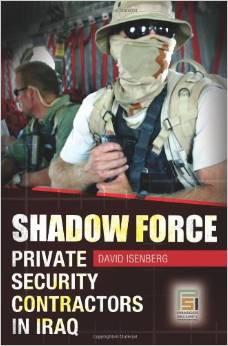
There is considerable detail at times and at other times only hints of major problems, for example setting aside $60M to deal with repercussions of a screwup.
How much of this was created by AI? I’m thinking you must have improved its output. And that must have been one heck of a prompt.